When your fridge in Los Angeles stops keeping food cold, you don’t have much time to “wait and see.” Groceries are expensive, and a warm refrigerator quickly turns into wasted food and stress.
This page explains the most common reasons a fridge stops cooling properly, what you can safely check yourself, and when it’s time to bring in local appliance repair los angeles ca support for proper diagnosis and repair.
If basic checks don’t solve the problem, it may be time for professional refrigerator repair los angeles ca so your home can get back to normal.
1. Incorrect Temperature Settings or Modes
Sometimes the problem is simple: the fridge isn’t set where you think it is.
What to check first:
- Is the temperature set too high?
- Has someone accidentally changed it to a “vacation,” “demo,” or “energy saver” mode?
- For most fridges, the fresh food section should be around 37–40°F and the freezer around 0°F.
If you correct the settings and the fridge still isn’t cooling properly after a few hours, it’s a sign the issue goes deeper. That’s usually the point where homeowners start considering home appliance repair los angeles ca instead of continuing to guess.
2. Overloaded Fridge or Blocked Air Vents
Refrigerators move cold air around inside. When the fridge is over-packed or vents are blocked, that cold air can’t circulate.
Common problems:
- Food containers pressed directly against interior vents
- Completely covered shelves that block air movement
- Tall items pushed up against the back wall
What you can do:
- Make space around visible vents
- Avoid stacking items so tightly that air can’t move between them
- Give the fridge a bit of room to “breathe” inside
If reorganizing doesn’t help and some areas still feel warm, the problem might not be airflow alone. At that stage, a technician experienced with appliance repair los angeles ca can check whether fans, sensors, or other components are involved.
3. Dirty Condenser Coils
Condenser coils release heat from the refrigerator. When they’re covered in dust and pet hair, the system has to work much harder, and cooling performance drops.
Signs this might be the issue:
- The sides or front of the fridge feel hotter than usual
- The compressor seems to run constantly
- The fridge is older and has never had the coils cleaned
Safe first step:
- Unplug the fridge
- If the manual allows, gently vacuum accessible coils at the back or underneath
If the coils are very hard to reach, or cleaning doesn’t improve cooling, it may be time for refrigerator repair los angeles ca to inspect the system more thoroughly.
4. Door Seal (Gasket) Not Closing Properly
If the door isn’t sealing, cold air escapes and warm air gets in, forcing the fridge to run longer and still not hold temperature.
Check for:
- Visible cracks or splits in the rubber gasket
- Gaps when the door is closed
- Food or sticky residue on the seal area
You can clean light buildup with warm soapy water and a soft cloth. If the door still doesn’t seal well, the gasket may need adjustment or replacement—common work for appliance repair los angeles specialists who handle door alignment and seal issues every day.
5. Frost Build-Up or Frozen Evaporator Coils
If the freezer is full of frost or ice and the fridge section is warm, air might not be able to move from the freezer to the fridge.
Possible signs:
- Heavy frost on the back wall of the freezer
- Freezer seems very icy, but fridge is too warm
- You hear the fan, but air doesn’t feel cold in the fridge compartment
This can be related to defrost system components (heater, timer, sensor) that are not working correctly. While you can:
- Make sure doors are closed properly
- Avoid leaving the freezer open for long periods
…heavy, recurring frost usually needs professional diagnosis. At that point, calling local appliance repair los angeles ca is more effective than repeatedly defrosting and hoping it doesn’t come back.
6. Fans or Internal Components Not Working
Modern refrigerators rely on multiple internal components:
- Evaporator fan (circulates cold air inside)
- Condenser fan (moves air over coils near the compressor)
- Relays, sensors, and control boards that tell everything what to do
Warning signs:
- You don’t hear the usual fan sound when the fridge is running
- You hear unusual buzzing, squealing or grinding
- The light comes on but there’s little to no cooling
Internal fans and electronic parts are not DIY-friendly. These issues are typical reasons people contact home appliance repair los angeles ca rather than continuing to experiment.
7. Serious Cooling Problems (Sealed System or Compressor)
If basic checks and cleaning don’t help, and the fridge still won’t cool, it may be a more serious cooling system problem:
- Sealed system or refrigerant leak issues
- Weak or failing compressor
- Faulty control board or temperature sensor
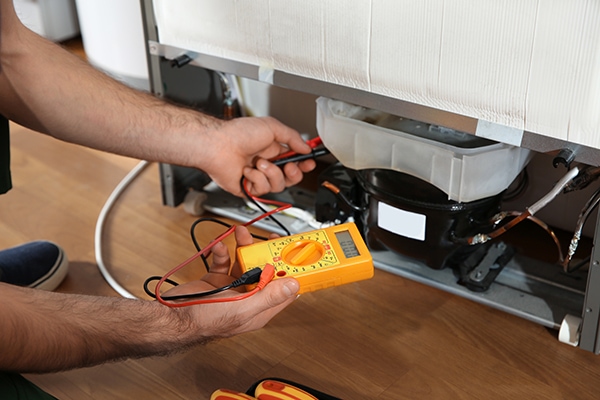
These problems require tools, training, and sometimes specialized parts. A technician providing appliance repair los angeles ca can test these components and give honest guidance on whether repair or replacement makes more sense, based on the age and condition of the refrigerator.
What You Can Safely Try Before Calling a Technician
Before you reach out to a local appliance repair los angeles ca company, this checklist covers what most homeowners can do safely:
- Confirm the fridge has power (outlet and breaker are fine)
- Check and adjust temperature settings
- Ensure doors are closing fully and seals are clean
- Reorganize to avoid blocking interior vents
- Carefully clean accessible coils if the manual allows and the fridge is unplugged
If cooling doesn’t improve after these steps and some time to stabilize, it’s usually more efficient to move on from DIY and bring in a professional.
When the Situation Becomes Urgent
Some cooling problems can wait a day or two. Others can’t.
It’s usually urgent when:
- The fridge feels close to room temperature
- The freezer is thawing rapidly
- There’s a strong burning or electrical smell
- Water is leaking onto the floor near electrical outlets
In those cases, homeowners often look for same day appliance repair los angeles ca or even emergency appliance repair los angeles ca to protect both their food and their home.
Getting Reliable Refrigerator Help in Los Angeles
Knowing these common causes and first steps helps you separate quick fixes from deeper problems. If your refrigerator still isn’t cooling after basic checks, or if you’re seeing any of the serious signs above, it’s usually time for refrigerator repair los angeles ca from a trained technician.
A trusted appliance repair los angeles provider can:
- Diagnose the real reason your fridge isn’t cooling
- Explain repair options clearly
- Help you decide whether fixing or replacing the unit is the better long-term move
That way, your fridge goes back to doing what it should—quietly keeping your food safe and cold—without endless guessing or repeated trips to the grocery store.