An oven that doesn’t heat evenly can ruin meals fast—burnt edges, undercooked centers, or one side of the pan cooking much faster than the other. Sometimes it’s a simple issue like rack placement or cookware. Other times, it’s a failing part that needs repair.
At Kay’s Repairs and Installations (often searched as Kay’s appliance repair), we help Los Angeles homeowners diagnose uneven oven heating and fix it safely. Below is a clear guide to the most common causes, what you can check at home, and when it’s time to stop using the oven and call a technician.
Safety First: When to Stop Using the Oven Immediately
Uneven heating is usually not dangerous by itself—but certain signs are.
Stop using the oven and take action if you notice:
- Gas smell (gas ovens):
Turn the oven off, don’t light anything, open windows, and ventilate. If the smell is strong or you feel unsafe, leave the area and contact your gas provider or emergency services. - Sparking, arcing, or popping (electric ovens)
- Burning smell and smoke that’s not food-related
- Breaker tripping repeatedly
- Error codes and the oven shutting off unexpectedly
- Extreme overheating or temperatures that swing wildly
If you’re unsure, it’s better to pause and get it checked than risk a bigger problem.
Why Ovens Heat Unevenly (Simple Explanation)
Most ovens heat from specific sources:
- Electric ovens: mainly the bake element (bottom) and broil element (top)
- Gas ovens: a burner and igniter create heat (often from below), then heat circulates
If one heating source is weak, if airflow is poor, or if the oven can’t hold heat, you get uneven cooking.
Common Causes of Uneven Heating in Electric Ovens
1) Failing bake element (very common)
The bake element does most of the work in baking. If it’s weak, parts of the oven won’t heat properly.
Signs:
- Slow preheating
- Food browns unevenly
- Bottom of food isn’t cooking right
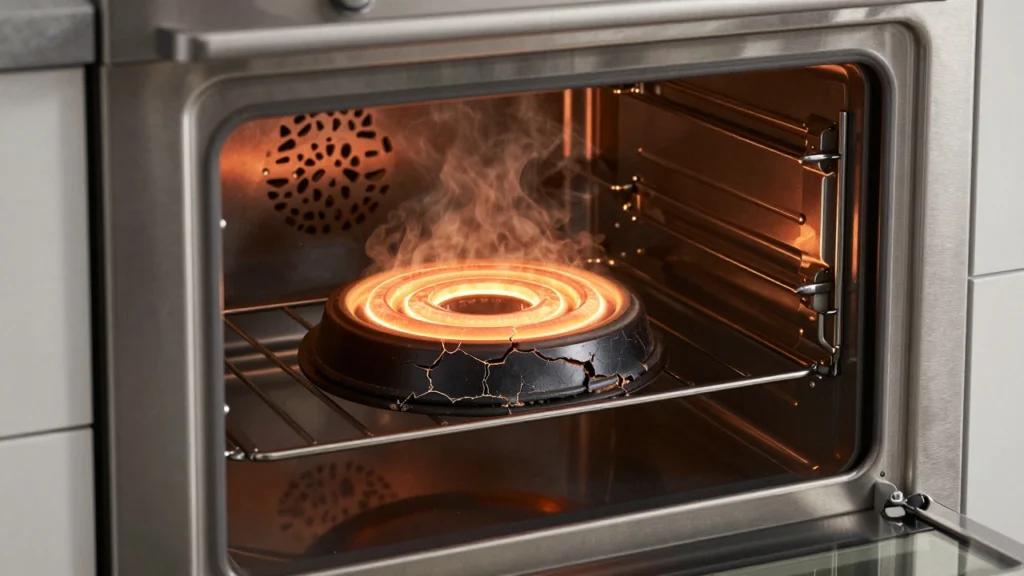
- Visible damage: blisters, cracks, or burn marks on the element
Fix: Element replacement is usually a straightforward repair for a technician.
2) Weak broil element or top heat imbalance
Even when baking, some ovens use the top element for balancing. If the broil element is failing, you may get uneven browning on top.
Signs:
- Top browning is inconsistent
- One side browns faster than the other
- Broil seems weak or doesn’t work
3) Faulty temperature sensor or thermostat issues
If the oven “thinks” it’s at the right temperature when it isn’t, it will cycle incorrectly—causing uneven results.
Signs:
- Oven runs hotter or cooler than the setting
- Temperature swings are large
- Results change from day to day
Fix: A technician can test the sensor and control system.
4) Door gasket leaks (heat escaping)
A worn gasket lets heat escape—often from one side more than the other.
Signs:
- You feel heat escaping near the door
- Oven struggles to maintain temperature
- Uneven browning near the front/edges
Common Causes of Uneven Heating in Gas Ovens
1) Weak igniter (very common)
A weak igniter can cause the burner to light inconsistently or produce less heat than it should.
Signs:
- Takes a long time to preheat
- Food cooks slower than normal
- Flame seems weak (when visible safely)
Fix: Igniter replacement is a common repair.
2) Burner issues (clogged ports or uneven flame)
If burner ports are dirty or blocked, heat distribution becomes uneven.
Signs:
- Hot spots in the oven
- Uneven cooking left-to-right
- Flame appears uneven (if visible safely)
3) Temperature regulation problems
Like electric ovens, gas ovens rely on sensors/thermostats. If temperature control is inaccurate, heat cycles poorly.
Convection Oven Problems: Fan and Airflow Issues
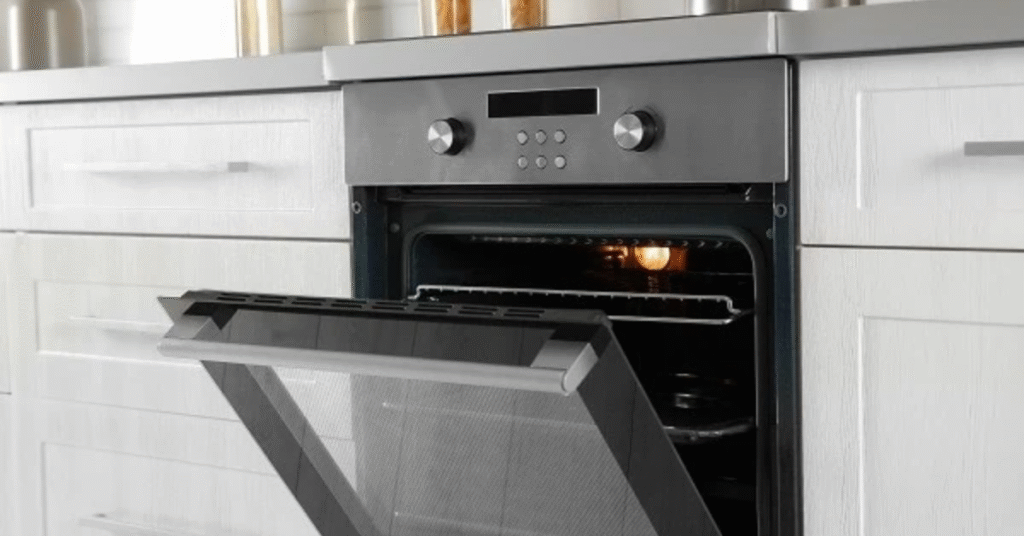
If you have a convection oven, a fan moves hot air around for more even cooking. If the fan isn’t working properly, your oven may cook unevenly even if the heat source is fine.
Signs:
- Cooking is uneven on different racks
- Convection mode doesn’t seem different from normal bake
- Fan is noisy or doesn’t run
Quick DIY Checks and Fixes You Can Try
These are safe steps that often improve uneven heating:
1) Use an oven thermometer
Oven displays can be off. A basic oven thermometer helps you confirm the real temperature.
- Preheat fully
- Check temp after the oven has stabilized
- If it’s far off, your oven may need calibration or sensor repair
2) Change rack position and rotate pans
Many baking problems are actually airflow and placement issues.
- Use the recommended rack position (often middle rack for baking)
- Rotate pans halfway through baking for even results
- Avoid placing pans too close to the oven walls
3) Don’t block airflow with foil or oversized trays
Lining the bottom with foil or using large trays can block heat circulation.
4) Check and clean the door gasket area
Wipe the gasket and the door frame. If the gasket is loose, torn, or flattened, it may need replacement.
5) Use proper cookware
Dark pans brown faster. Thin pans can create hot spots. If your oven is “almost” even but results are inconsistent, cookware can be the hidden cause.
Fixes That Usually Need a Technician
Call a pro if any of these are likely:
- Bake element replacement (electric)
- Igniter replacement (gas)
- Sensor/thermostat diagnosis and replacement
- Control board or relay problems
- Electrical issues causing sparking or breaker trips
- Persistent uneven heating despite correct rack placement and good cookware
When to Call for Oven Repair in Los Angeles
Call Kay’s Repairs and Installations / Kay’s appliance repair if:
- Uneven heating is consistent and ruining meals
- Preheating takes much longer than it used to
- The oven temperature seems inaccurate
- You see visible damage on an element
- You smell gas, see sparking, or the oven behaves unpredictably
If you’re looking for appliance repair west hollywood ca, we can also service West Hollywood and nearby areas depending on scheduling and coverage—reach out through kaysrepairsandinstallations.com..
How to Prevent Uneven Oven Heating
A few habits reduce future issues:
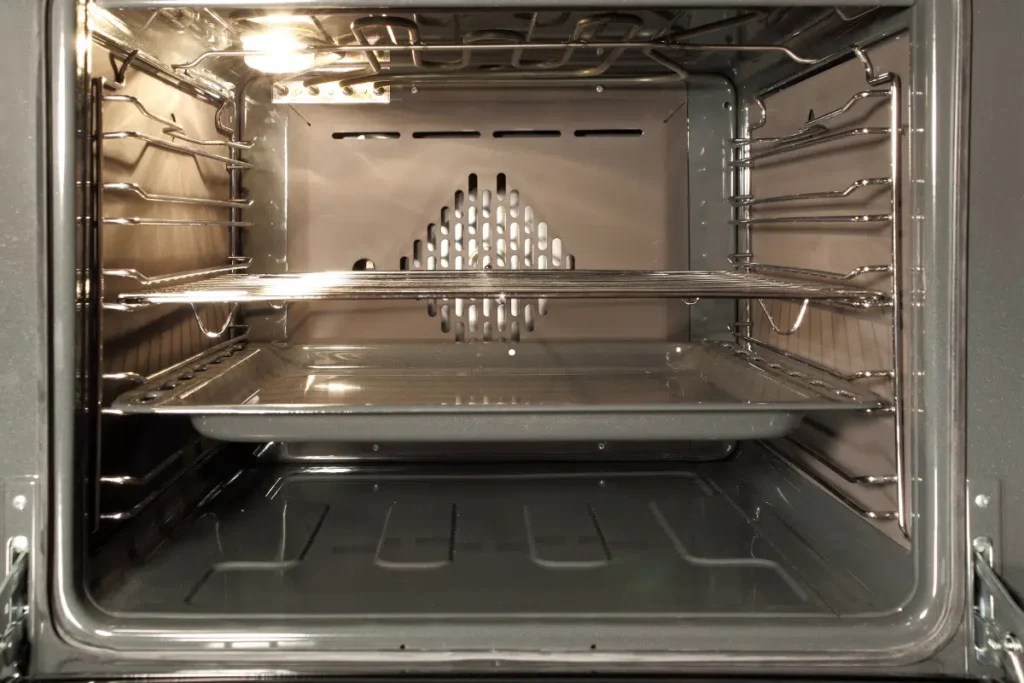
- Keep the oven clean (especially around vents and edges)
- Avoid foil blocking vents or the oven bottom
- Don’t slam the door (protects the gasket)
- Use an oven thermometer occasionally to spot drift early
- Address slow preheat early before it becomes a bigger failure